I don’t mow before at least the first week of May. It is my cardinal rule.
Partly because the bees and other beneficial insects need time to wake, stretch their wings, and rise from their winter beds. Partly because I like letting the wildflowers, the tiny, scrappy ones the world tries so hard to ignore, have their moment in the sun.
Every spring, my yard grows into itself slowly. I high-mow the first weekend of May, giving just enough trim to keep peace with the edges, but always mowing around the sea of bugleweed that carpets the front hill in purple. The backyard, that first week, became a golden patchwork of low-slung dandelions. I let them be. The bees were happy. I was busy. The yard was alive.
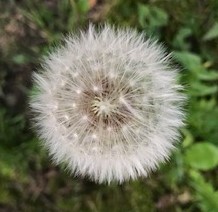
Then it rained. All month, on and off. Just enough to make excuses for not plugging in the electric mower. And honestly? I didn’t mind. Nature was doing her thing. The front stayed somewhat tidy. But the backyard? By the second half of the month, it was a sea of puffballs. Knee-high and dancing on the breeze. Dandelion fluff lifting like thoughts you forget mid-sentence.
I left them for a bit longer, watching purple clover hold its ground nearby, and yellow woodland irises peek out from under the grapevine. The herb bed, though, began crying for help: while I was admiring the wilderness, some of the fluff settled in. It choked out the struggling chamomile and dimmed the brightness of my thyme. I also lost my last old sage plant. Was it the fluff? Was it the cold of a bitter January? We’ll never know.
Meanwhile, my next-door neighbor mowed like clockwork, twice a week. He doused his lawn with fertilizer and weedkiller, and for two days, the chemical stench wafted through my open windows. I had to close them against the spring air and birdsong. The cats and I both sulked. One morning, a little puddle of foamy runoff gathered at their sidewalk’s edge, pouring into my driveway. Nature tried to wash the poisons off.
By month’s end, I’d mowed once and a half. I pulled most of the dandelions from the herb bed. A few rogues will return, of course. But so will the lemon balm, which is bolting like a champion. One of the newer sage plants self-propagated, soft and green and stubborn, so new life sprung forth despite it all.
Maybe the lesson is balance. Let the grass be wild. But keep a closer eye on the herb beds. Weed early, so the roots you’ve chosen can breathe. And let go of the perfect lawn myth. A lawn is just one way to occupy space. Why should grass be more welcome than clover, or dandelions, or the little purple stars of bugleweed?
Things to Do With Dandelions
- Dandelion Tea: Young leaves can be dried and steeped. Slightly bitter, but full of minerals.
- Pressed Petals: Pluck the smallest flowers and press them in a book. Use them in bookmarks or handmade cards.
- Dandelion Wishes Jar: Collect fluff heads in a glass jar as a keepsake of spring’s soft rebellion.
- DIY Salve: The flowers can be infused in oil to soothe dry skin and small scrapes.
Let your yard be alive. Let it be a little messy. The bees like it that way. And maybe, just maybe, the soil does too.
Discover more from Woolie Sparrow
Subscribe to get the latest posts sent to your email.

